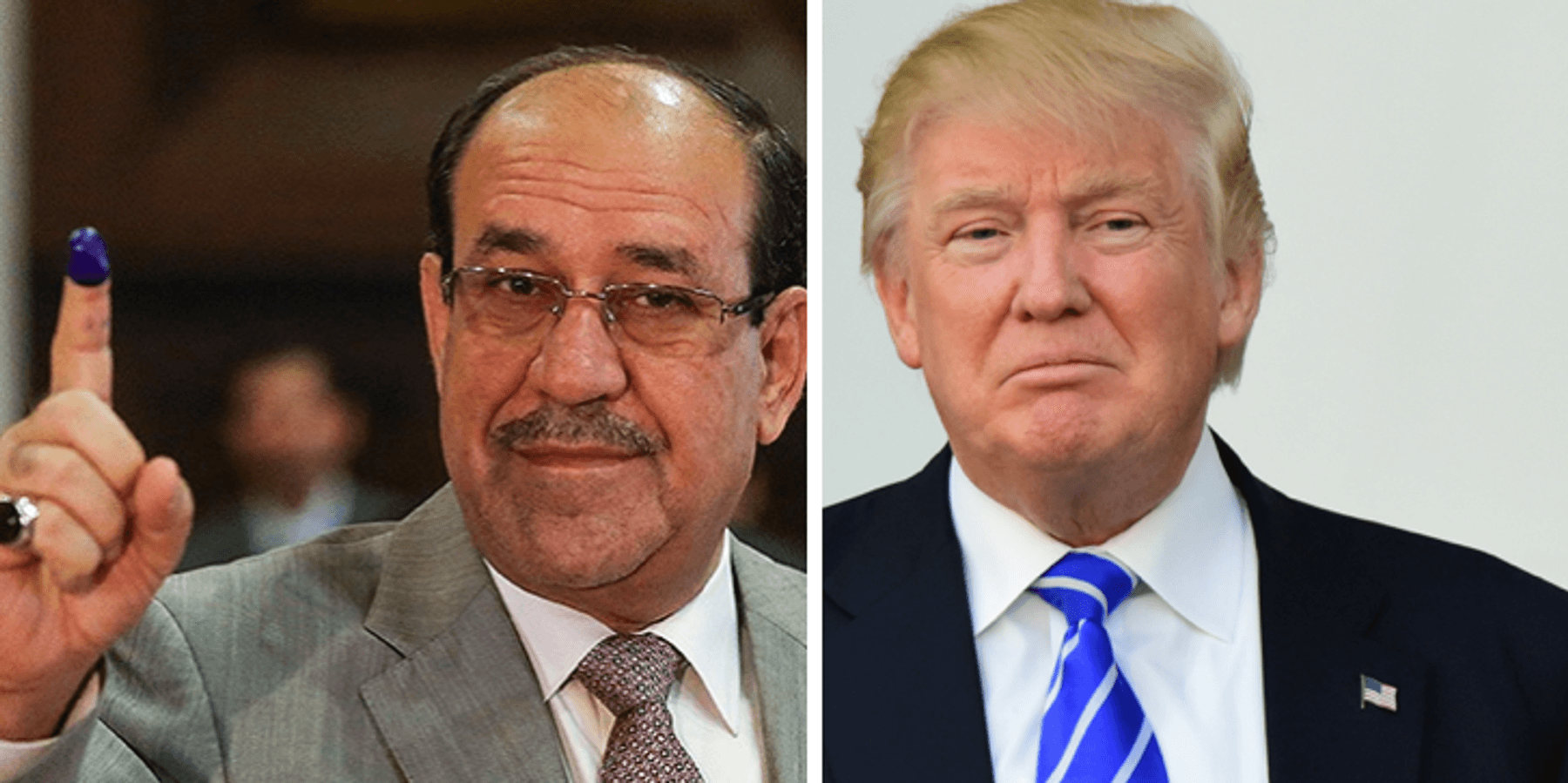
On 27 January, President Donald Trump took to his Truth Social account to warn that, should Iraq’s former Prime Minister Nouri Al-Maliki return to office, “the United States of America will no longer help Iraq and, if we are not there to help, Iraq has ZERO chance of Success, Prosperity, or Freedom.”
The post was startling, coming from a country that has long called for free and fair elections in Iraq, unfettered by external pressures. His remarks have roiled an already uncertain post-election process. and provoked protests in a country undergoing its sixth general election since 2003.
A collection of Shia parties called the Coordination Framework named al-Maliki as its nominee last week. A parliament session was to take place on Tuesday to elect a president after which the president would appoint the prime minister. That session was canceled, however, because of lack of a quorum. Maliki is favored to win, but it's not a done deal, yet. That is why Trump's remarks are having such a negative effect.
“In Iraq, we often speak of three informal vetoes over the prime minister:Washington, Tehran, and the clerical establishment in Najaf,” said Marsin Alshamary, a specialist in post-2003 statebuilding and democratization in Iraq, and assistant professor of Political Science at Boston College. “What is different this time is that the intervention is no longer behind closed doors, but openly public.”
While Trump argues that Maliki’s previous tenure weakened Iraq, empowered Iran and damaged U.S. interests, his comments are widely perceived by Iraqis as a blatant intrusion into domestic political debate, especially menacing by recent developments in Venezuela, Trump’s renewed threats against Iran, and insisting the U.S. will "have Greenland" — reinforcing perceptions that punitive pressure remain central tools of his foreign policy.
Maliki is poised to become the next Prime Minister. So it is worth revisiting how Maliki first rose to power, and the role Washington played in building up both his authority and his image.
When Maliki first emerged on the Iraqi political scene, he was endorsed by President George W. Bush in 2006 as “the right guy for Iraq.” From 2006 to 2008, he was at the helm of the Iraqi state during its sectarian civil war and in 2008, he sent in the Iraqi military to curb the power of Muqtada Al-Sadr’s militia. While these were only some of the factors that ended the bloody sectarian war, Maliki nevertheless emerged as a powerful Iraqi nationalist figure.
Yet the image of Maliki as a stabilizing nationalist figure would not endure. The policies and decisions that consolidated his authority also sowed the seeds of a far more dangerous unraveling. By June 2014, Al Qaeda in Iraq returned to the country in the form of ISIS and to many, Maliki was the catalyst, beginning with armed clashes between the Iraqi security forces — heavily politicized since his election — and Arab Sunni protestors in 2013, generating even greater indignation among the Arab Sunnis of Iraq who felt discriminated against since the fall of Saddam.
The fallout was not limited to the battlefield. As the security crisis worsened, the cracks in Iraq’s political and institutions became increasingly apparent. Another post-election stalemate akin to 2010 emerged, centered on Maliki's personality. This stalemate would endure until summer, meaning that Iraq had failed to form a government as ISIS conducted its offensive into Mosul in the summer 2014.
Since announcing his resignation in August of 2014 because of losing support from his coalition caused by the rise of ISIS, Maliki has nonetheless remained a political heavyweight in Iraq. Not an election goes by without talk of his return to the forefront of Iraqi politics. His recent return to the political stage has been a surprise to few, even with the strong performance of Prime Minister Mohamed Shia Al-Sudani.
Yet Maliki does face significant challenges as prime minister, even if the U.S. president had stayed quiet. Maliki alienated Iraq’s Kurds by withholding oil revenues. He alienated Iraq’s Arab Sunnis by authorizing the use of military force against protestors in 2013.
Nor does he command unified support within Iraq’s Shia community. Since their first clash in 2008, Maliki and Muqtada Al-Sadr have remained bitter rivals. Sadr, whose coalition won a plurality in the 2018 elections but was outmaneuvered by Maliki’s Coordination Framework from forming a government (as Maliki did in 2010 to Ayad Allawi), still wields a large and mobilized following, hardly a recipe for consensus, and more likely to perpetuate intra-Shia polarization.
However, in Iraq, sovereignty is the sacred cow of politics: any perceived attempt to manipulate outcomes from abroad courts the very dynamics that allow figures like Maliki to regain prominence. President Trump and his advisors may have fallen into that trap.
This is not the first time Trump has tried to impose outcomes in Iraq through blunt displays of power. In the early hours of January 2020, he ordered a drone strike, killing Qassem Soleimani, the head of the Iranian Islamic Revolutionary Guard Corps’ (IRGC) Quds Force and the architect of a regional network of Iraqi militias. Even more significant, in the same strike he killed Abu Mahdi al-Muhandis, the revered deputy commander of the Iraqi Popular Mobilization Forces and leader of Kataib Hezbollah militia, both seen as national saviors in the fight against ISIS.
While the killing of Qassem Soleimani produced ripples throughout the Iranian Middle East proxies, the effect inside Iraq was more muted. Killing Muhandis, on the other hand, resonated throughout Iraq leading to attacks on the U.S. embassy and intensifying the strength of the militias there — the very militias Trump now demands Iraq to demobilize.
Whether delivered through social media or military force, Trump’s intervention is likely to prove counterproductive. Nouri Al-Maliki remains a divisive figure within Iraq, but history shows that overt foreign pressure, especially when framed as threats, tend to shift the discussion away from accountability and toward sovereignty.
By publicly warning Iraqis against their own political choices, Washington risks triggering a backlash that turns Maliki into a symbol of resistance to external pressure. Rather than weakening his standing, such interventions can lend the former PM renewed legitimacy, harden positions and narrow the space for internal compromise.
In attempting to influence Iraq’s political future through public coercion and conditional support, President Trump’s Truth Social post is likely to engender the opposite outcomes he sought, undermine U.S. credibility and reinforce the very dynamics of resentment, dependency and polarization so familiar in Iraq. In attempting to force Iraq to move forward, Trump may push Iraq back into the hands of Nouri Al-Maliki.
- Trump makes moves to take all troops out of Iraq and Syria ›
- Trump bet $40B on Milei, but what do Americans get out of it? ›
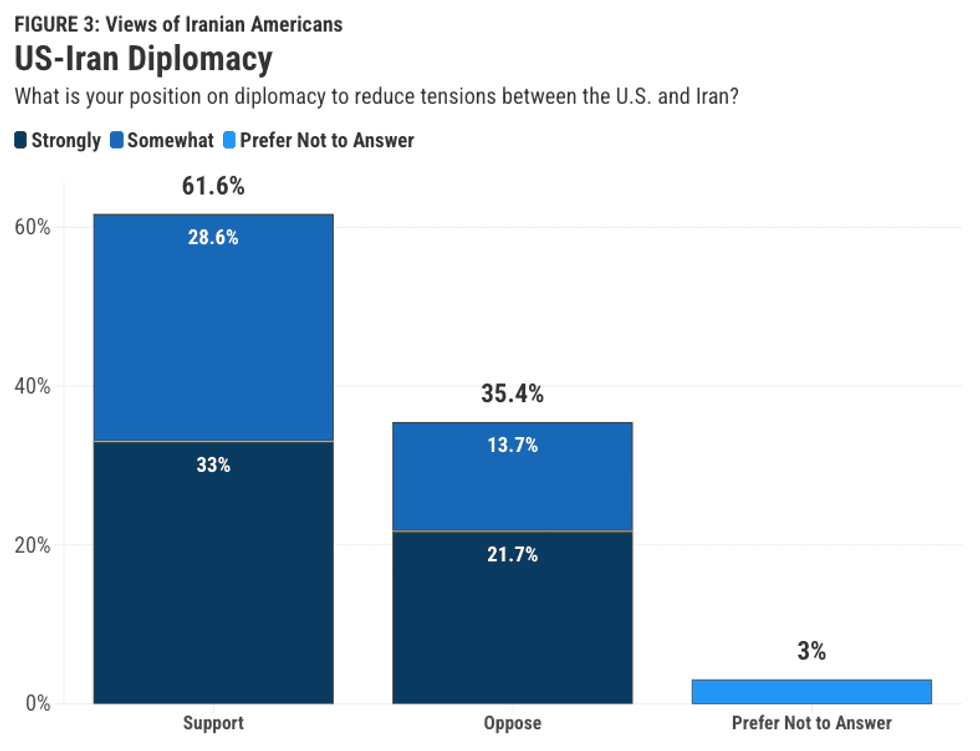 Screengrab via niacouncil.org
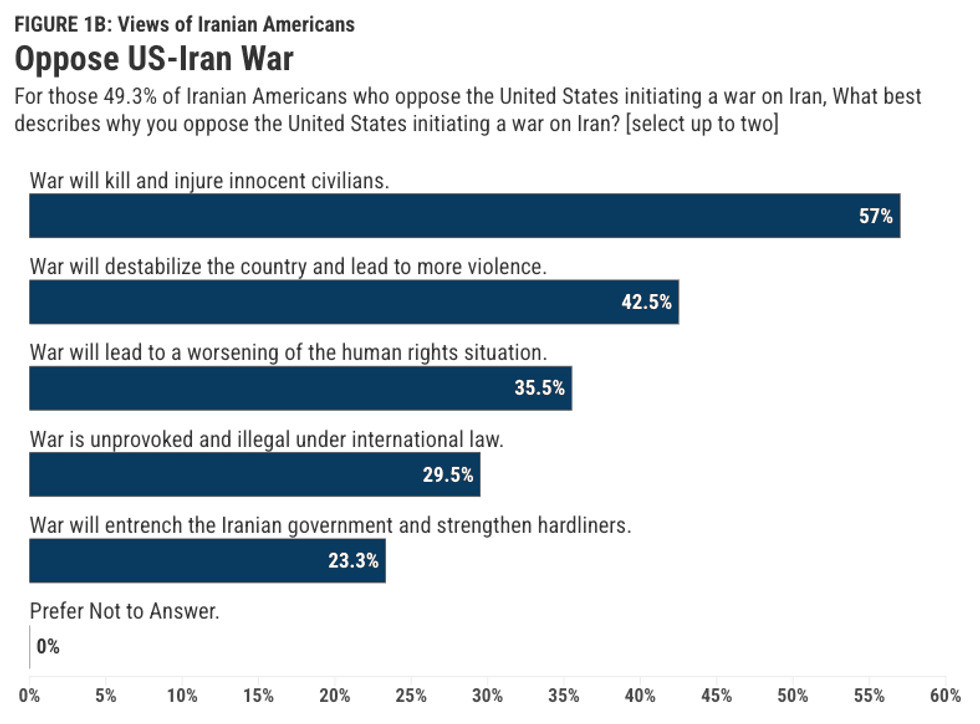 Screengrab via niacouncil.org